
Paystack
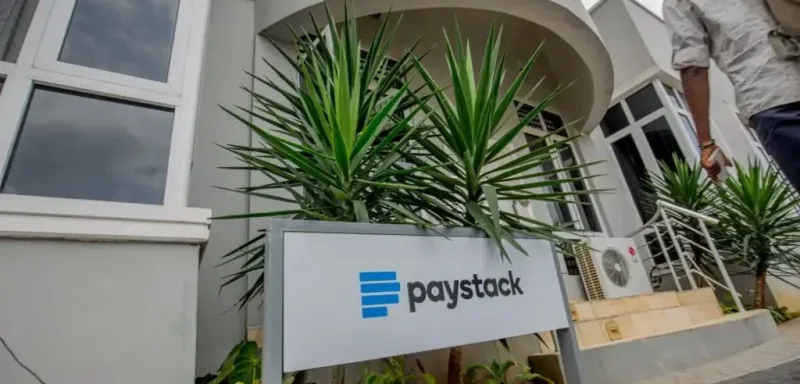
✓ VerifiedPaystack is a Nigerian financial technology company that provides online and offline payment solutions to businesses across Africa. In simple terms, it gives organisations of all sizes a fast, reliable way to collect payments
About
In the world of African technology, few names carry the weight that Paystack does. In just a handful of years, two Nigerian computer science graduates built a payments company so compelling that one of Silicon Valley's most respected startups paid over $200 million to own it — the largest startup acquisition ever to come out of Nigeria. This is the story of Paystack: how it started, how it grew, who built it, and where it stands today.
What Is Paystack?
Paystack is a Nigerian financial technology company that provides online and offline payment solutions to businesses across Africa. In simple terms, it gives organisations of all sizes a fast, reliable way to collect payments — from card payments and bank transfers to mobile money — through tools that can be integrated into a website or app in minutes.
Often described as "the Stripe for Africa," Paystack built its reputation on an obsessive focus on user experience, solving a problem that had long frustrated African businesses: accepting payments online was complicated, unreliable, and buried in paperwork.
The Origins: A Problem Worth Solving
The story begins with two young Nigerians, Shola Akinlade and Ezra Olubi, who met as computer science students at Babcock University in Nigeria, graduating in 2006. They had been writing software together since their university dormitory days in the early 2000s.
Akinlade, born and raised in Lagos, began his career outside startups — working as a management trainee handling database management at Heineken, then as a software engineer at several Nigerian banks. He later founded a software development and consulting company, Klein Devort, and built an open-source collaboration platform called Precurio. Olubi, born in Ibadan, shared the same technical foundation.
It was Akinlade's banking experience that revealed the gap. Working on payment integrations, and frustrated by how hard online transactions were in Nigeria, he had a realisation in 2015: he could charge a card directly from his computer. As he later recounted, he thought it was "cool" — and when he showed it to a friend, the response was immediate: "This is a company. This is Stripe." That spark became Paystack.
Founding and Y Combinator
Paystack was founded in 2015 by Akinlade and Olubi, with Akinlade as CEO and Olubi as CTO. Their mission was simple but ambitious: make it ridiculously easy for African businesses to accept payments from anyone, anywhere in the world.
The company's big break came quickly. In late 2015, Paystack was accepted into Y Combinator, the famed Silicon Valley accelerator that had backed companies like Stripe — becoming the first Nigerian startup ever admitted into the program. They received an initial seed investment (reported around $120,000), but, just as importantly, the connections, credibility, and mentorship that came with it. Paystack publicly launched in 2016 after completing Y Combinator's Winter 2016 cohort.
Explosive Growth
What set Paystack apart was its product sensibility. While other Nigerian payment processors required extensive documentation and weeks of integration time, Paystack promised businesses they could start accepting payments in minutes.
The growth that followed was remarkable. By 2017, the platform was processing millions of dollars monthly for thousands of businesses, adding features such as subscription billing, marketplace splits, and transfer capabilities. It became the default choice for Nigerian startups and established companies alike, serving clients that ranged from betting platforms and airlines to government agencies and corporate giants like MTN and the ride-hailing firm Bolt.
The funding milestones tracked this rise:
- 2016: Raised $1.3 million in seed funding from investors including Tencent and Comcast Ventures, alongside local backers.
- 2018: Secured $8 million in a Series A round led by Stripe, with participation from Visa and Tencent.
By the time of its acquisition, Paystack was serving more than 60,000 businesses in Nigeria and Ghana — and, incredibly, processing more than half of all online transactions in Nigeria. It had expanded to Ghana and begun a pilot in South Africa, and employed over 100 people.
The Landmark Moment: Acquisition by Stripe
In October 2020, the African tech ecosystem celebrated a watershed moment: Stripe — the American payments giant headquartered in San Francisco — acquired Paystack for over $200 million (roughly ₦76.6 billion at the time).
The deal was historic on two fronts. It was the largest startup acquisition ever to come out of Nigeria, and it was Stripe's biggest acquisition anywhere at that point. The relationship was a natural one: Stripe had already led Paystack's 2018 Series A, and the two companies shared a philosophy. Stripe's leadership praised Paystack's "original thinking," noting that the team clearly "gets it" — a judgment, they stressed, that had nothing to do with the company being African and everything to do with the quality of its product.
Notably, Paystack wasn't even for sale. Akinlade later recalled, with a grin, that the company wasn't looking to sell when Stripe came calling. What persuaded the founders was the mission. "I'm driven by the mission to accelerate payments on the continent," Akinlade said, "and I am convinced that Stripe will help us get there faster."
There was also a poignant backdrop: the announcement was delayed because of the #EndSARS protests then sweeping Nigeria. For many, the deal carried symbolic weight — proof, in a period of national tension, that young Nigerians building valuable companies could win global recognition. As Akinlade put it, if one of Silicon Valley's most sophisticated companies could acquire a business from the Nigerian ecosystem, it would "unlock a lot of opportunities" and show people that "you can make things and it can work."
Life After the Acquisition
Becoming part of Stripe didn't slow Paystack down. The company continued to push new milestones, including becoming the first African payment gateway partner for Apple Pay, being selected as the preferred payment partner for the open-source e-commerce platform WooCommerce, integrating with Shopify to help African retailers sell online, and partnering with accounting software Xero to let African users add a "Pay with Paystack" button to invoices.
The company has also navigated strategic shifts. In November 2023, it was reported that Paystack was restructuring — scaling back efforts in Europe and the Middle East to refocus on expanding within African markets, doubling down on the continent it was built to serve.
More recently, Paystack has begun extending beyond pure payment processing. In 2025 it launched Zap, a consumer app allowing users (including foreigners in Nigeria) to make payments, signalling a move toward consumer-facing products. And in 2026, Paystack announced the acquisition of Ladder Microfinance Bank — a clear indication that the company is broadening into wider financial services beyond its payments roots.
The Founders Today
The acquisition transformed Akinlade and Olubi into icons of African tech, with each reportedly worth over $100 million. In October 2022, Akinlade was conferred with the national honour of Officer of the Order of the Niger (OON) by the Nigerian government, in recognition of his contributions to advancing technology in finance.
Akinlade has also channelled his success into football and community development. In March 2023, he acquired a majority stake in the Danish second-division club Aarhus Fremad, with a vision of linking it to Sporting Lagos FC as a talent academy — creating pathways for local Nigerian players to find opportunities in Europe.
Both founders remain influential figures in the African technology landscape, continuing to shape the future of the ecosystem they helped put on the global map.
Key Milestones at a Glance
- 2015 — Paystack founded in Lagos by Shola Akinlade and Ezra Olubi; accepted into Y Combinator (Winter 2016 cohort) as the first Nigerian startup admitted.
- 2016 — Public launch; raised $1.3 million in seed funding (Tencent, Comcast Ventures, and local backers); integrated with Shopify.
- 2017 — Rapid growth, processing millions of dollars monthly for thousands of businesses; rolled out subscription billing, marketplace splits, and transfers.
- 2018 — Raised $8 million Series A led by Stripe, with Visa and Tencent participating.
- 2020 — Acquired by Stripe for over $200 million (≈₦76.6 billion) in October — the largest Nigerian startup exit and Stripe's biggest acquisition at the time; serving 60,000+ businesses and processing over half of Nigeria's online transactions.
- 2021 — Became the first African payment gateway partner for Apple Pay; named preferred payment partner for WooCommerce.
- 2022 — Partnered with Xero; co-founder Shola Akinlade awarded the Officer of the Order of the Niger (OON).
- 2023 — Restructured operations, scaling back in Europe and the Middle East to refocus on African markets; Akinlade acquired a majority stake in Danish club Aarhus Fremad.
- 2025 — Launched Zap, a consumer payments app.
- 2026 — Acquired Ladder Microfinance Bank, expanding beyond payments into broader financial services.
Why Paystack Matters
Paystack's significance goes far beyond its valuation. It proved that a world-class technology company could be built in Lagos, by Nigerians, solving Nigerian problems — and still command the attention and capital of Silicon Valley's elite. Its acquisition became a reference point in countless reports on African venture capital, cited as evidence of growing international interest in the continent's startups, particularly in fintech.
For a generation of African founders, Paystack is more than a payments company. It is a proof of concept: a demonstration that ambition, technical excellence, and a deep understanding of local problems can produce something globally valuable.
Conclusion
From a few lines of code written in a university dormitory to a $200 million acquisition and a continued march into broader financial services, Paystack's journey is one of the defining stories of African technology. Founded on the simple idea that businesses deserve an easy way to get paid, it has grown into a symbol of what is possible across the continent.
As Akinlade once reflected, "Paystack wasn't built by me — it was built by the economy." In serving that economy so well, two friends from Babcock University ended up reshaping how a continent moves money — and inspiring countless others to believe they could build something that works.
Last verified: September 21, 2026
Editorial Note: This article was researched using publicly available sources, with priority given to official sources where available. Information relating to deadlines, eligibility, funding amounts and programme requirements can change. Readers should verify current details with the relevant official organisation before applying. Read our full Editorial Policy.