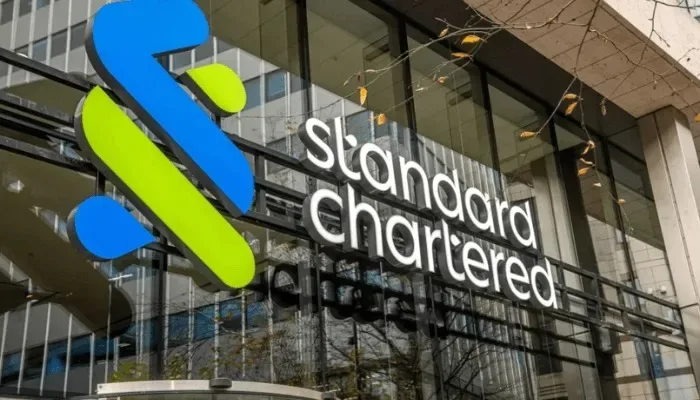

Standard Chartered PLC
✓ VerifiedStandard Chartered PLC is one of the most distinctive institutions in global banking — a London-headquartered bank that earns the overwhelming majority of its profits not in Britain, but in Asia, Africa, and the Middle East.
About
Standard Chartered PLC is one of the most distinctive institutions in global banking — a London-headquartered bank that earns the overwhelming majority of its profits not in Britain, but in Asia, Africa, and the Middle East. Its story stretches back more than 170 years, woven through the rise of global trade, the age of empire and decolonisation, and the modern era of digital finance. This is the history of how two 19th-century trade banks became a 21st-century financial giant.
Two Banks, Two Continents: The Origins
Standard Chartered PLC traces its roots to two separate banks, each founded to finance the booming international trade of the Victorian era, and each anchored in a different part of the world.
The Chartered Bank (1853)
The Chartered Bank of India, Australia and China was founded by James Wilson on 29 December 1853, a Scotsman who secured a royal charter from Queen Victoria to establish it. Wilson's vision was to link the trade routes of the East with the capital of the West.
The bank moved quickly. It opened in Mumbai (Bombay), Kolkata and Shanghai in 1858, followed by Hong Kong and Singapore in 1859. Its business was the financing of commodity trade — cotton from Mumbai, indigo and tea from Kolkata, rice from Burma, sugar from Java, tobacco from Sumatra, hemp from Manila and silk from Yokohama. The bank began issuing banknotes denominated in Hong Kong dollars in 1862.
Two pieces of 19th-century infrastructure supercharged its growth. The bank played a major role in the development of trade with the East following the opening of the Suez Canal in 1869 and the extension of the telegraph to China in 1871. By the 1920s, Chartered had become a leading exchange bank across Asia, and was the first foreign bank licensed in several territories.
The Standard Bank (1862)
The second predecessor was rooted in southern Africa. The Standard Bank of British South Africa was established in 1862 by John Paterson, commencing operations in January 1863. Paterson, a prominent figure in the Cape Colony, led a consortium of businessmen who founded the bank in London before starting business in Port Elizabeth.
The Standard Bank's fortunes were tied to Africa's mineral wealth. This bank was instrumental in financing South Africa's mining industry, particularly the diamond fields of Kimberley and the gold fields of Johannesburg. It financed the Kimberley diamond fields from 1867 and the Johannesburg gold fields from 1885, following railways and mining booms to expand across southern, central, and eastern Africa. By 1953, the Standard Bank had a significant presence with 600 offices across Africa, becoming the dominant bank on the continent. Its African network was further strengthened by a merger with the Bank of West Africa in 1965.
The 1969 Merger: Standard Chartered Is Born
By the late 1960s, both banks were strong regional powerhouses — one dominant in Asia, the other in Africa — but each was exposed to the political and economic uncertainties of decolonisation in its home markets.
The solution was union. The two banks, The Chartered Bank and The Standard Bank, merged on 18 November 1969, to form Standard Chartered. The combined entity was initially incorporated as The Standard and Chartered Banking Group Ltd.
The strategic logic was twofold. The merger aimed to create a stronger entity with expanded networks in Europe and the United States, building upon their established Asian and African operations. By balancing African and Asian exposures, the new bank also mitigated the sovereign and operational risks that came with the era's wave of decolonisation. In 1975, the company adopted the name Standard Chartered Bank Ltd.
Expansion, Diversification, and a Hostile Takeover Battle
Through the 1970s and 1980s, Standard Chartered diversified and expanded. The group acquired Mocatta and Goldsmid Ltd in 1973, moving into bullion dealing, and pushed into the United States with the acquisition of Union Bancorp of California in 1979.
Then came the defining corporate drama of the era. In 1986, Lloyds made a hostile takeover bid for the Group. Standard Chartered's chief executive, Michael McWilliam, was determined to resist. The purchase of 35 percent of Standard Chartered's shares by three businessmen helped to thwart the Lloyds bid. Among this consortium was Singaporean property tycoon Khoo Teck Puat, who took a stake he would later increase substantially.
Although the bid was defeated, it spurred Standard Chartered into a period of change, including a series of divestments notably in the US and South Africa. The bank sold Union Bank to the Bank of Tokyo and the United Bank of Arizona to Citicorp.
Leaving South Africa — and a Separated Standard Bank
One of the most significant chapters in Standard Chartered's history is its withdrawal from South Africa. The bank's South African affiliate had been profitable but operated under growing political pressure during the apartheid era. Finally, in 1987 the bank divested its South African holdings, ending its 125-year presence in that nation. It was the last foreign bank to leave South Africa.
This divestment had a lasting consequence: it cut Standard Chartered loose from its African banking offspring. During the 1970s and 1980s Standard Chartered gradually reduced its shareholding, and sold its remaining 39% stake in Standard Bank Group in 1987, transferring full ownership to South African investors. From that point, Standard Bank Group became an entirely separate entity — and, in fact, a competitor. To avoid confusion with its former parent, Standard Bank rebranded many of its operations across Africa under the Stanbic name, which it still uses in countries such as Nigeria, Kenya, Ghana, Uganda, and Zambia. Today, Standard Bank Group is the largest bank in Africa, completely independent of Standard Chartered.
Scandals and Regulatory Reckonings
Like many global banks, Standard Chartered's history includes serious compliance failures and regulatory penalties.
In 1992, scandal broke when banking regulators charged several employees of Standard Chartered in Mumbai with illegally diverting depositors' funds to speculate in the stock market. The resulting fines and provisions cost the bank close to £350 million — at the time, roughly a third of its capital.
Far more consequential were the money-laundering and sanctions cases of the 2010s. In August 2012, Standard Chartered agreed to pay $340 million to the New York Department of Financial Services to settle money-laundering allegations, followed by a further $327 million to other US agencies that December. On 19 August 2014, the bank was fined $300 million by the New York Department of Financial Services for breach of money-laundering compliance related to potentially high-risk transactions involving clients in Hong Kong and the UAE. The problems were traced largely to the bank's Hong Kong subsidiary and UAE branches.
The reckoning continued. In April 2019, it was reported that Standard Chartered may have to pay approximately $1 billion to settle its ongoing investigations in the US and UK, covering violations of US sanctions, forex trading regulations, and historical financial crime controls.
Major Acquisitions and Strategic Growth
Alongside its setbacks, the bank pursued significant growth. In 1999, it purchased the global trade finance division of Union Bank of Switzerland and a majority stake in Thailand's Nakornthon Bank. Around the turn of the millennium, it completed two of its largest acquisitions — ANZ Grindlays Bank and Chase Manhattan's Hong Kong banking operations — deepening its dominance in its core Asian and South Asian markets.
The bank also invested in China's financial sector, taking a $500 million stake in the Agricultural Bank of China through its 2010 Hong Kong IPO, and later partnering on renminbi clearing.
Standard Chartered Today
Standard Chartered PLC is now a British multinational bank specialising in wealth management, corporate and investment banking, and treasury services. Despite being headquartered in the United Kingdom, it does not conduct retail banking in the UK, and around 90% of its profits come from Asia, Africa, and the Middle East. The bank operates across more than 50 markets and employs in the region of 80,000–83,000 people.
Its share structure reflects its global character. Standard Chartered has a primary listing on the London Stock Exchange and is a constituent of the FTSE 100 Index, with secondary listings on the Hong Kong Stock Exchange and the National Stock Exchange of India. Its largest shareholder is the Government of Singapore–owned Temasek Holdings. The Financial Stability Board classifies it as a systemically important bank.
The bank has continued to modernise, embracing a digital-first outlook and engaging with the fintech community, particularly through hubs in Hong Kong. It is also widely recognised in popular culture as the long-standing shirt sponsor of Liverpool Football Club, a partnership that began in 2010 and has been repeatedly extended.
A Retreat from Some African and Middle Eastern Markets
In recent years, Standard Chartered has refocused its sprawling network, electing to exit a number of smaller markets to concentrate on its most profitable operations. This included plans to divest or wind down retail and, in some cases, full operations across several African and Middle Eastern countries — selling subsidiaries in markets such as those in sub-Saharan Africa and the Middle East to focus capital on higher-growth, higher-return centres. It was through one such divestment programme that Nigeria's Access Bank agreed to acquire several Standard Chartered African subsidiaries. The strategy reflects a broader industry trend: global banks trimming far-flung branch networks in favour of digital channels and concentrated, high-value markets.
Conclusion
Standard Chartered's history is, in many ways, the history of global trade itself. Born from two banks built to finance cotton and tea in Asia and diamonds and gold in Africa, it has navigated the end of empire, hostile takeovers, damaging scandals, and sweeping technological change. Through it all, it has retained a singular identity — a Western-headquartered institution whose heart beats in the emerging economies of the East and South.
More than 170 years after James Wilson secured his royal charter, Standard Chartered remains exactly what it was designed to be: a bridge between markets, connecting capital and commerce across continents.
Open positions
4 jobsMarkets Intern
Standard Chartered Early Careers Talent Network
Premium Executive
Head, HNI/UHNI Clients Acquisition and Management
Categories
Awards & recognition
- Euromoney Awards for Excellence – including "World's Best Bank for Sustainable Finance" and market-level "Best Bank" titles
- Global Finance – "Best Bank" and "Best Digital Bank" awards across multiple markets
- The Banker (Financial Times) – various market and category recognitions
Branches
- Standard Chartered Bank Nigeria Limited,: 142 Ahmadu Bello Way, Victoria Island, Lagos, 101241, Nigeria
Last verified: June 29, 2026
Editorial Note: This article was researched using publicly available sources, with priority given to official sources where available. Information relating to deadlines, eligibility, funding amounts and programme requirements can change. Readers should verify current details with the relevant official organisation before applying. Read our full Editorial Policy.